
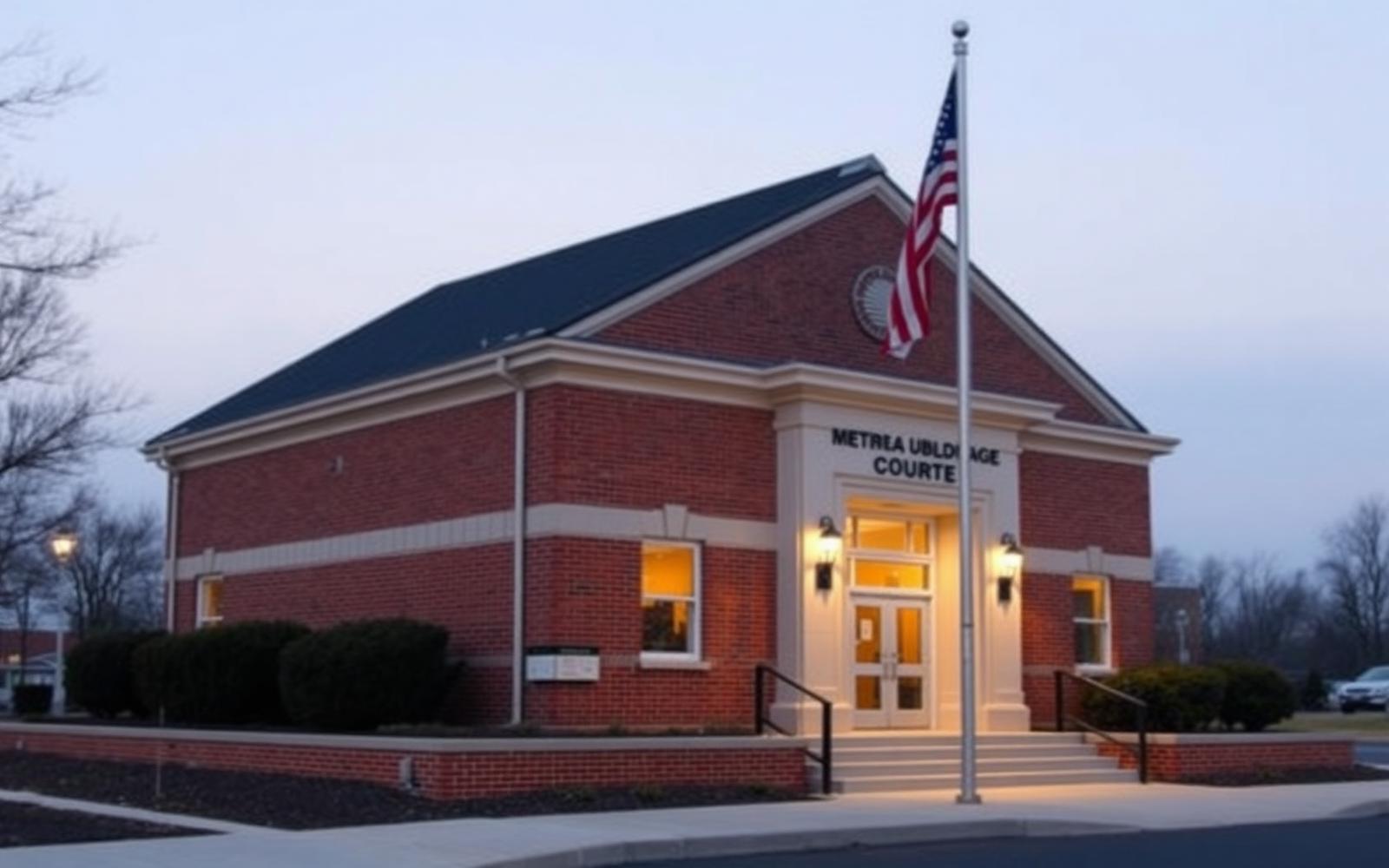
The municipal courts of New Jersey are often described as the courts of first resort, and for many residents they will be the only contact they have with the criminal justice system. The matters litigated there — disorderly persons offenses, traffic violations, driving while intoxicated, and ordinance violations — are smaller in nominal exposure than the indictable offenses litigated in the Superior Court, but the consequences they carry can be substantial: the loss of driving privileges, the imposition of insurance surcharges, the creation of a record that will follow a person through employment screening and immigration adjudication. The firm represents clients in municipal courts across northern and central New Jersey with the same preparation it brings to its indictable practice.
The Stakes of a Municipal Court Matter
It is a mistake to treat a municipal court matter as a routine appearance. A first-offense conviction for driving while intoxicated under N.J.S.A. 39:4-50 carries significant fines, mandatory ignition-interlock installation, mandatory attendance at the Intoxicated Driver Resource Center, and surcharges payable to the New Jersey Motor Vehicle Commission for three consecutive years. A conviction for a disorderly persons offense — simple assault, possession of a controlled dangerous substance, shoplifting under the threshold for indictable charging — creates a record that is reportable on most employment and licensing inquiries. A municipal court summons should be answered with counsel, and the firm provides that counsel.
Driving While Intoxicated
DWI prosecutions in New Jersey are governed by N.J.S.A. 39:4-50 and turn on three categories of evidence: the observations of the arresting officer, the performance of the standardized field sobriety tests, and the result of the breath testing administered on the Alcotest 7110. Each of these categories is subject to defensive challenge. Field sobriety testing is governed by the National Highway Traffic Safety Administration protocols, and deviations from those protocols undermine the reliability of the results. The Alcotest is governed by the procedures established in State v. Chun, and any deviation from those procedures is a basis for exclusion of the result. The firm litigates these matters with attention to each of the available defensive theories.
Refusal Charges Under N.J.S.A. 39:4-50.4a
A driver who refuses to submit to breath testing is subject to a separate charge under N.J.S.A. 39:4-50.4a, which carries license suspension consequences that parallel those of the underlying DWI. The State must prove that the officer had probable cause to believe the driver was operating under the influence, that the driver was placed under arrest, and that the driver was read the standard statement and refused to provide samples. Each element is litigable, and the firm presents the available defenses with the rigor the stakes require.
Disorderly Persons Offenses
Simple assault, harassment, criminal mischief, possession of small quantities of controlled substances, and shoplifting below the indictable threshold are litigated in municipal court as disorderly persons offenses under Title 2C. The firm pursues outcomes that protect the client's long-term interests — including conditional discharge under N.J.S.A. 2C:36A-1 for first-time controlled-substance offenders, conditional dismissal under N.J.S.A. 2C:43-13.1 for other qualifying offenses, and the various pretrial intervention and diversion programs that may be available depending on the charge and the client's history.
Traffic Violations and the Driver's License
Traffic matters that appear minor on their face can produce disproportionate consequences. The accumulation of points on the New Jersey driving record can result in license suspension and substantial insurance consequences. Convictions for reckless driving under N.J.S.A. 39:4-96, driving while suspended under N.J.S.A. 39:3-40, and leaving the scene of an accident under N.J.S.A. 39:4-129 carry penalties that can include incarceration. The firm represents clients in traffic matters with attention to both the immediate disposition and its downstream consequences for the driving record and the insurance profile.
Ordinance Violations and Local Practice
Each municipality in New Jersey maintains its own code of local ordinances, and violations of those ordinances are litigated in the municipal court of the community in which the alleged conduct occurred. The firm appears regularly in the municipal courts of Bergen, Hudson, Essex, Union, Passaic, Middlesex, and Monmouth counties, and it brings to each appearance the familiarity with local prosecutors and judges that produces favorable dispositions. Local practice matters in municipal court more than in almost any other forum.
Why Counsel Matters Even in 'Minor' Matters
The single most common error in municipal court is the assumption that the matter is too small to warrant counsel. Plea negotiations conducted without the benefit of counsel routinely produce dispositions that an experienced lawyer could have improved, and convictions entered without counsel routinely produce collateral consequences the defendant did not anticipate. The firm represents clients in municipal court with the discipline it brings to every other forum.